First Step Into AI: It’s Easier Than You Think
Published:
When we hear about Machine Learning (ML) and Artificial Intelligence (AI), it’s easy to feel like these are towering, impenetrable topics only accessible to those with years of experience in math and computer science. But as I’m discovering through my current read, Why Machines Learn, the truth is far more encouraging: the first steps into this world are not as intimidating as they might seem.
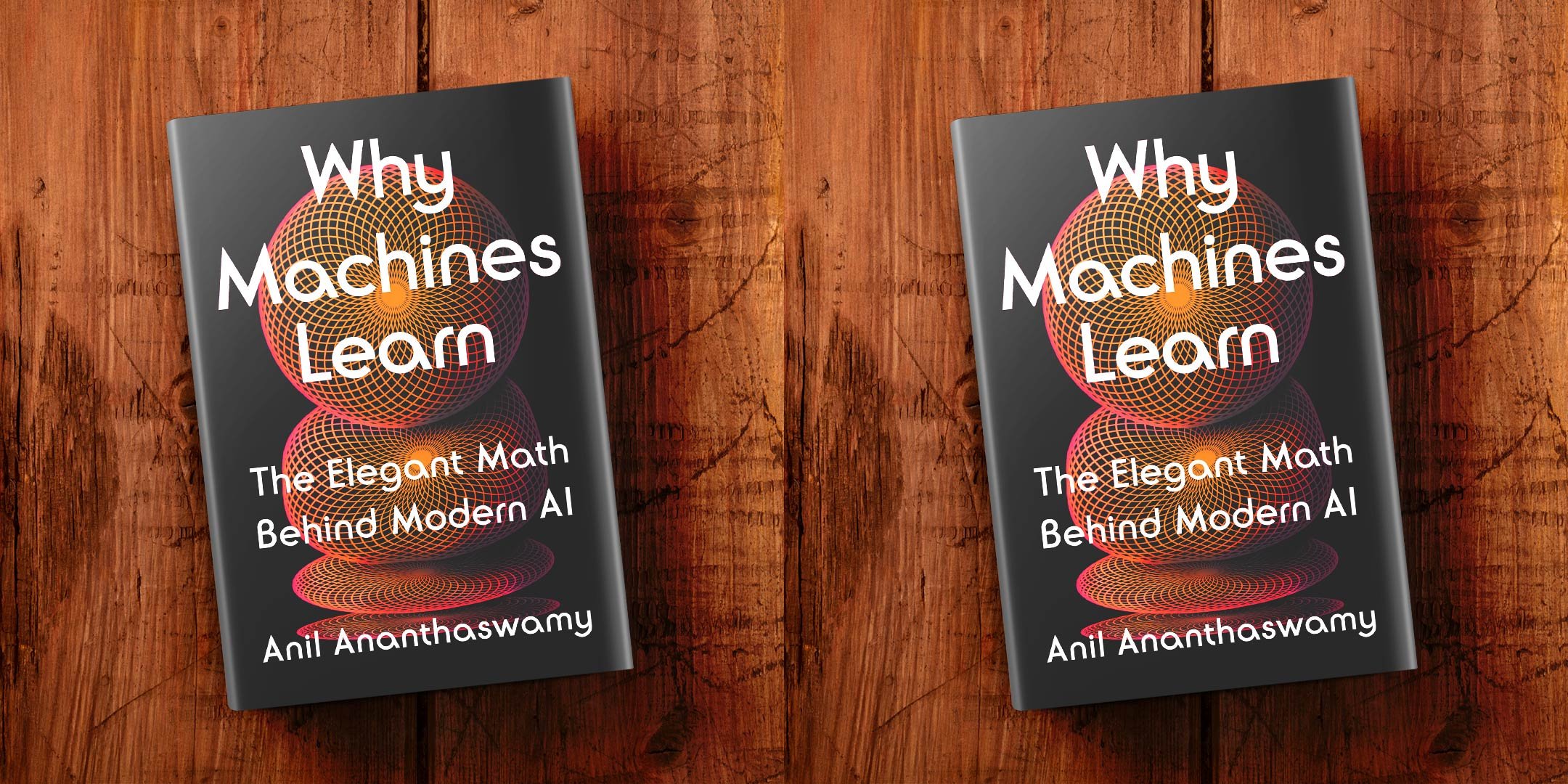
This book has been a game changer for me. Unlike many technical resources that jump straight into dense equations or code snippets, Why Machines Learn takes a refreshing approach. It introduces the core ideas behind ML in a way that’s both welcoming and surprisingly intuitive. What I especially appreciate is how it doesn’t shy away from math but rather makes it approachable, even for someone who might not have a strong background in it.
One of the most fascinating aspects of the book is how it ties the math to the historical development of AI. Instead of just presenting formulas, it tells the story of how key concepts and algorithms, like gradient descent, came to be. By framing these mathematical ideas within a historical narrative, the author, Anil Ananthaswamy, makes them feel like part of a broader journey, one that we’re all invited to join.
This historical perspective shows that the field of ML didn’t emerge overnight. It’s the result of decades of mathematical exploration and discovery. And because of this, even the most sophisticated ML techniques are built on simple, understandable ideas that anyone can learn.
The book also introduces a handful of fundamental algorithms that are still widely used today. It’s incredible to see how these foundational methods have stood the test of time, forming the backbone of modern AI systems. Learning about these basics, like what the Perceptron is or how a simple linear model learns from data, has given me a sense of confidence that I never expected to have at this early stage.
If you’re like me and you’ve always been curious about ML but unsure where to begin, here’s what I’ve learned: Start with a resource that emphasizes the “why” as much as the “how”, and Why Machines Learn does exactly that. It makes it clear that you don’t need to be a math genius to understand these ideas, you just need curiosity and the willingness to take the first step.
What I’m discovering is that the entry point to ML isn’t guarded by impossible gates, theory, or technical jargon. Instead, it’s open to anyone who wants to understand how machines learn and why these ideas matter. Sure there’s math involved, but it’s math with a story, math with a purpose. And that’s what makes it feel accessible.
Through this blog, I hope to share my journey as I keep learning, building, and exploring this fascinating field. My goal is to show that AI and ML are not just for the experts or researchers, they are for anyone willing to understand how data can teach machines to see patterns, make decisions, and even create.
Through this blog, I hope to share my journey as I keep learning, building, and exploring this fascinating field. My goal is to show that AI and ML are not just for the experts or researchers, they are for anyone willing to understand how data can teach machines to see patterns, make decisions, and even create.
If you’re interested in diving deeper, I highly recommend checking out Why Machines Learn. It’s a great companion to this blog and offers a comprehensive yet approachable exploration of the topics you’ll see on here.
Have you ever felt like ML was out of reach? Or have you found a resource that made it click for you? I’d love to hear about it. Let’s learn together.
Leave a Comment